Metal Gear Solid 4: Guns of the Patriots
Nearly two decades on, no game opens quite as effectively as the fourth entry in the Metal Gear Solid series. Trucks make their way through the war-scarred streets of a sun bleached Middle East as the haunting tunes of Nobuko Toda and Jackie Presti’s “Love Theme” play in the background. "War... has changed" David Hayter gravely informs us before we see Snake himself, shockingly aged and sporting a gray moustache. The aircraft sometimes spotted overhead might look slightly futuristic but the handheld camera imagery remains as ripped out of the headlines now as it was back in the days of the War on Terror, Kojima’s vision of the Middle East as a playing field for private military contractors to test out weaponry on the population as prescient as ever.
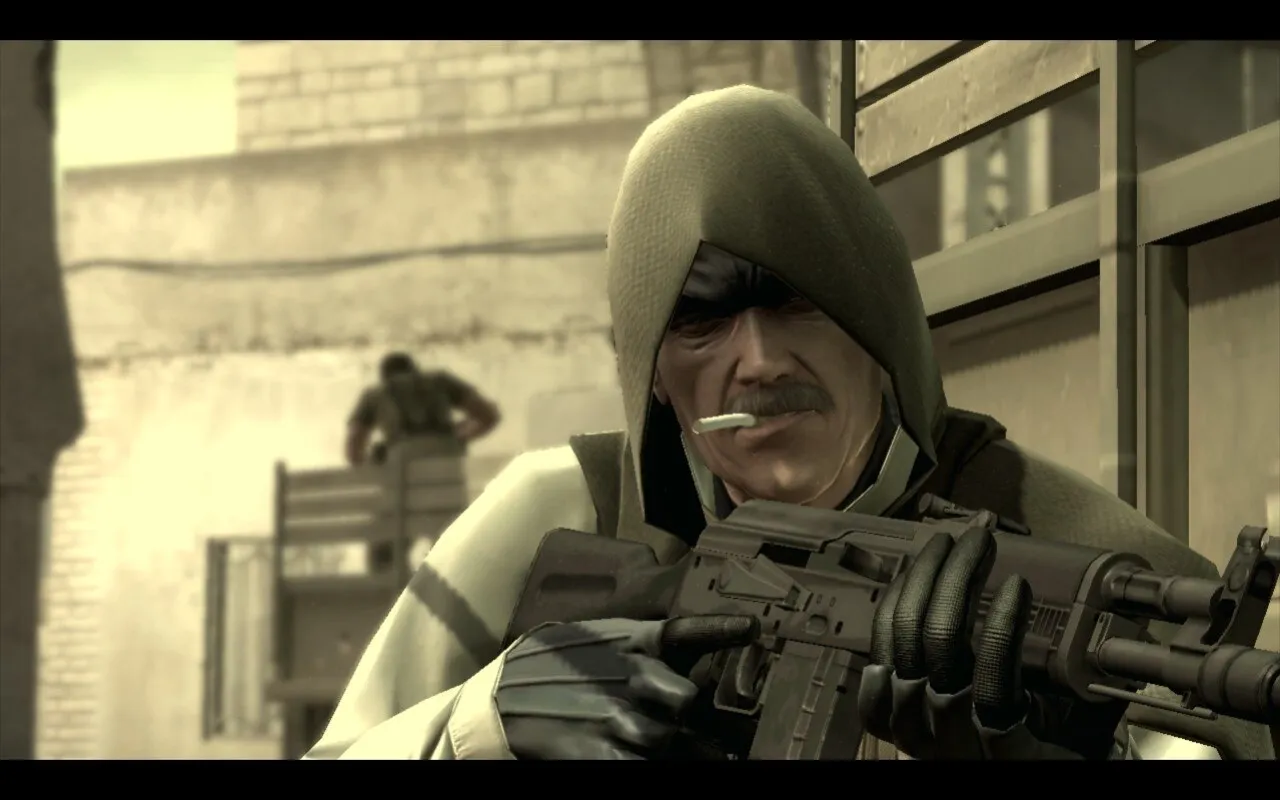
I never got around to playing Metal Gear Solid 4: Guns of the Patriots back in 2008. Sure I followed the hype cycle from the very beginning, from the reveal of Old Snake to the trailers that featured the imagery described above, not to mention the reviews that expressed various levels of excitement and disappointment and any number of fan reactions. Isn’t it funny to be near wholly familiar with a piece of media before you even get around to checking it out for yourself? MGS4 remained locked to the Playstation 3, the result of its being built specifically around that console’s architecture, and Konami only saw it fit to port the damn thing to everything under the current sun in the year of our lord 2026. So finally here I am, marvelling at how well it runs on a Steam Deck. Too bad modern machines lack one of the original’s highlights, an animation of Old Snake smoking as the game slooowly installed on the PS3’s hard drive in order to help with the load times. Then again once installed on Steam Deck the game loads so damn fast you hardly have the time to reach for a pack, never mind smoke one.
MGS4 was the result of a reportedly difficult development cycle; apparently Hideo Kojima’s right-hand man, Shuyo Murata, was slated to direct before the big man was pressured into taking on the project himself. The result is equal parts ambitious and messy, a game with a lot of grand and interesting ideas that do not always work as intended. Take the main gimmick of the game’s first two chapters, battlefield stealth. Essentially Snake is an outside party dropped in a skirmish between a private military contractor and a local militia. The idea is that Snake needs to weave his way through the ongoing fight, letting the two sides slug it out. Help one faction, however, and its soldiers will soon learn to recognise you. This is clever, but replays soon reveal that a lot of troop behaviour is based around scripted events that play out as you make your way around the map. The third chapter follows on this with something completely different - Snake is in an Eastern European city under lockdown by, yes, a private military contractor and has to tail a Resistance member. The very thought of MGS going noir, all cigarettes and trench coats and foggy streets, is exciting as it gets; in practice it’s just one of those tailing missions from the Assassin’s Creed games only without the fun of leaping across rooftops.
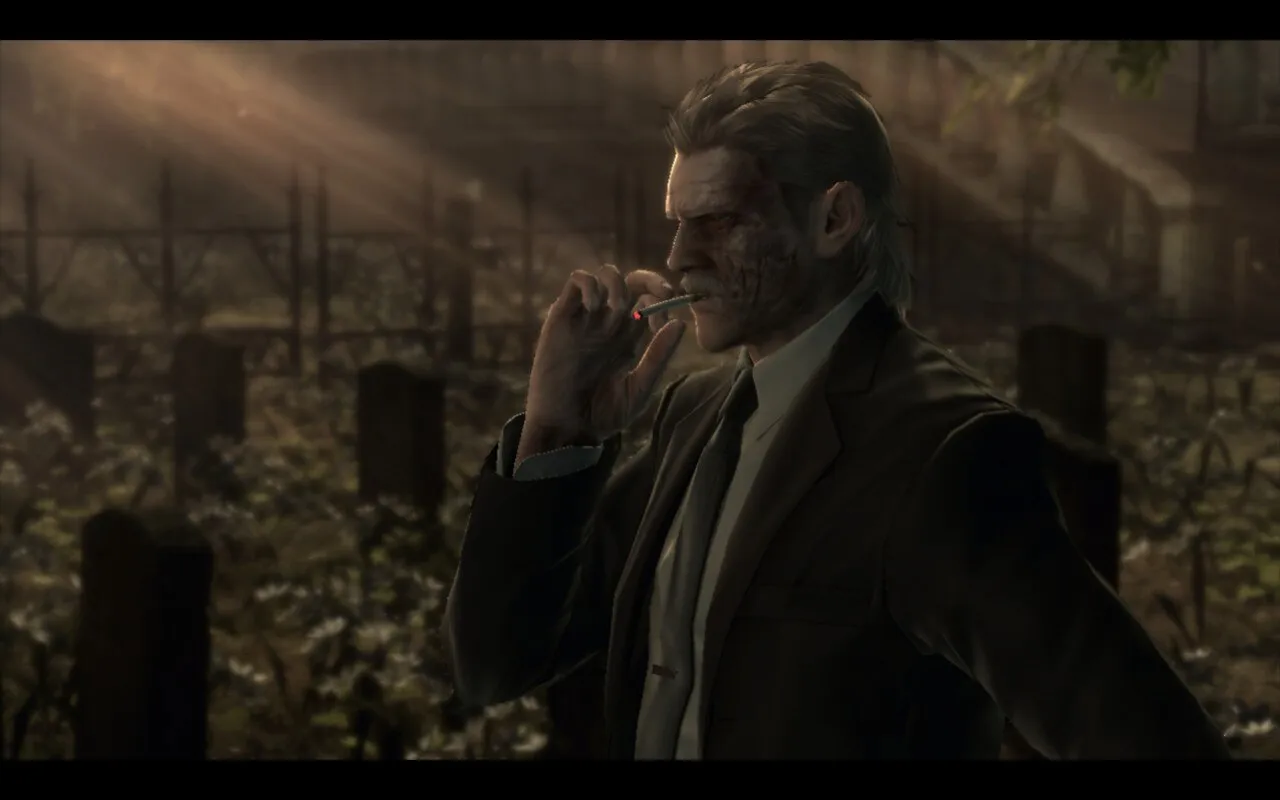
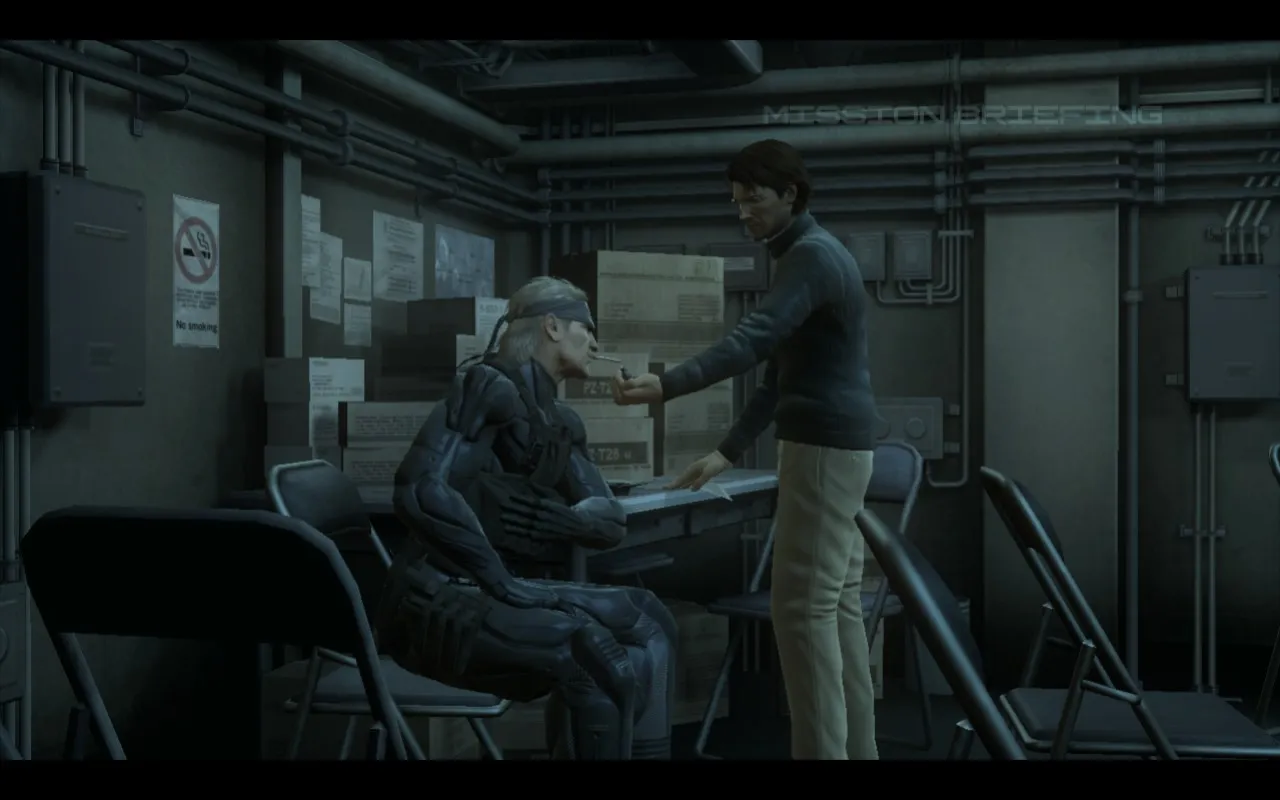
We’re talking about how MGS4 plays, but we’re ignoring the main critical elephant in the room - despite what everyone says no, Guns of the Patriots is not all cut scenes, but it sure does have a lot of them. Most of these are fun, as they feature excellent performances on both the voice and motion capture cast, and say what you will about Kojima but he does know how to shoot and edit. I even have a soft spot for the briefings that open each chapter, as overly long and awkward as they are - after all they depict Snake and Otacon as an old married couple raising an adopted daughter, a sad child who tries her best at cooking horrible eggs that her two gay dads (and whoever they invite in the constantly airborne bomber they call home), inevitably, fail to eat. It’s equal parts cute and weird, and allows for a perfect segue into an attempt at a literary theory of Metal Gear Solid.
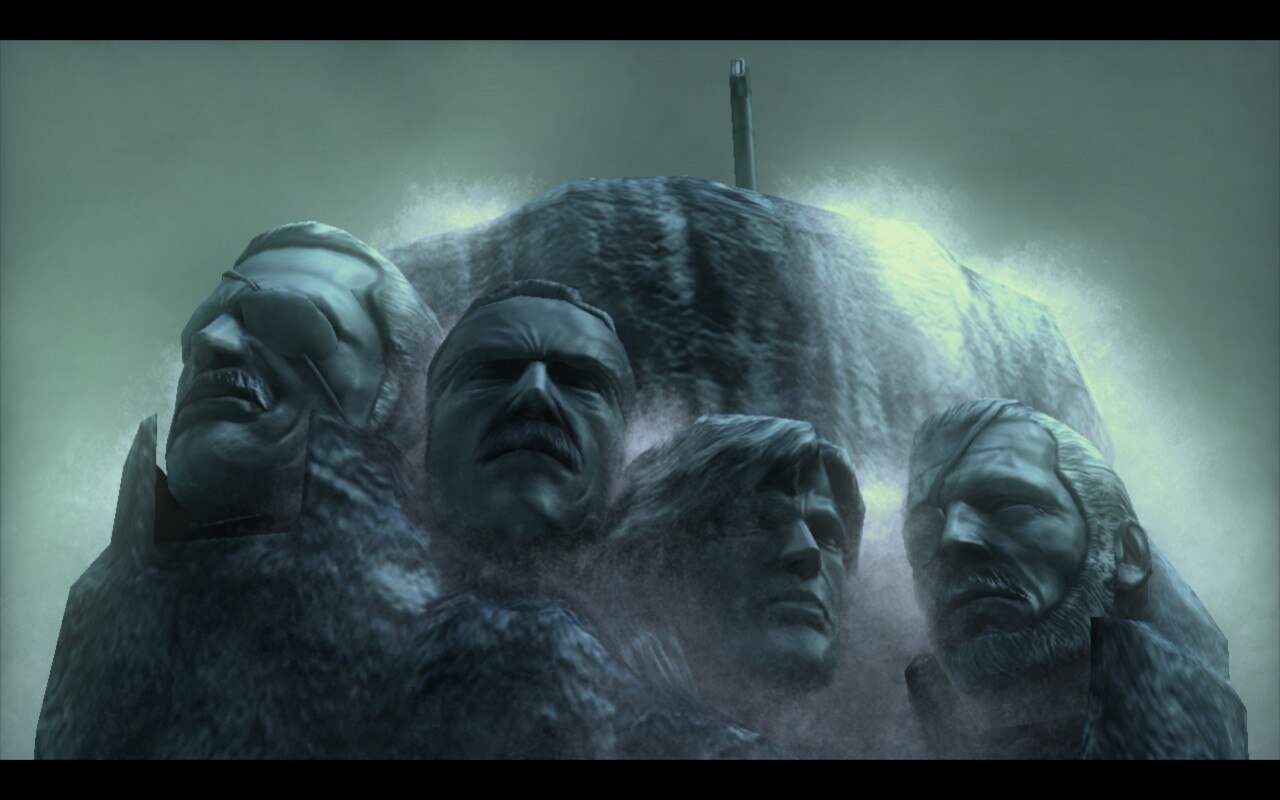
I’ve seen the MGS games described in modernist and post-modernist terms, and these make fine enough lenses through which to view the series. However here I’ll insist that these games are actually magical realist1. Since that’s what we started it, let’s stick to MGS4. The opening is, again, replete with imagery ripped straight from the headlines, with a local militia in crappy trucks armed with AK47s set out to fight against an invading army clad in gear that’s very much akin to what American forces look like once their government decides to invade a country in the Middle East. Nothing is out of the ordinary, at least until an honest to goodness robots shows up - and this is not just any robots, this are Gekkos, a masterpiece of Yoji Shinkawa design that’s essentially a tank on top of a pair of disturbingly organic legs that bellows like an angry bovine. No one remarks about the sudden appearance of these monstrosities and how they stomp people to death, this leaking of the futuristic in the contemporary being clearly the ordinary state of things in the alternate reality of the MGS universe. Such imagery persists through the game, with its culmination being at the finale that sees a regular battleship duke it out against a science fiction submarine so huge it features a memorable Mount Rushmore of Metal Gear Solid villains that appears for a single cut scene shot and is never seen again, never mind remarked upon.
This juxtaposition is the norm for the MGS games. The very first game starts, once again, on realistic military terms with Solid Snake sent to infiltrate a base in Alaska. Mentions of nanomachines and “genomed” soldiers add a mildly science fiction touch but the weaponry and hardware, like the appearance of a Hind D helicopter gunship, are straight out of the real world. Infiltrate further into Shadow Moses, however, and things get hazier and more dreamlike as Snake faces off against a cyborg ninja and a psychic gimp before he learns he’s actually the clone of Metal Gear villain Big Boss… as is the game’s actual villain, Liquid Snake. The second MGS takes this framework and pushes it even further into nightmare territory, as it reveals itself to actually be a simulation based on the exploits of the legendary soldier Solid Snake, a virtual reality program designed to train child soldiers. At the end the game tells you to switch off that console, go outside, and touch some grass while you're at it. MGS2 proved mildly controversial, which is why MGS3 saw a return to more traditional territory with a jolly Cold War era prequel telling the origins of Big Boss. The background is replete with actual historical detail from the time period, only the game is set in the famous rainforests of… Russia, and sees Big Boss face off against a man who can control lightning, a Russian operative obsessed with American revolvers, and a man with the power to control bees, among many other colourful characters2. What about later games in the series? MGSV: The Phantom Pain returns to the nightmare territory of MGS2 with its revelation that you’re not playing as Big Boss, you’re actually just some shellshocked trooper brainwashed into thinking he’s Big Boss. You’re not a hero, you’re just some goon programmed to bring about a utopian vision of forever war where fellow brainwashed soldiers can find permanent employment perpetuating proxy wars for the highest bidder3.
So yes, MGS4 does fit this magical realist framework I’m grandly dubbing the Unified Theory of Metal Gear Solid. But how does it rank alongside its fellows? It’s, alas, my least favourite - not bad in any way, but definitely underbaked and burdened by hours where the gameplay switches to cut scenes just when it starts feeling good. And may, just maybe, I’m just waving it all under “magical realism” just to dodge the fact that the plot is a stew of baffling decisions and poorly defined motivations that runs on vibes, not logic. Then again I can only admire the sheer stones of it all, especially for the fact that it resolutely closes the Solid Snake story. The Master Collection remaster also wisely just tweaks the resolution enough to let the visual stylings shine; no attempts at remaking the models here, the game's angular character designs, calculated lighting choices, and smart texturing lend a clean, stylised look continues that stands out to this day.
For all its faults there will never be another game like MGS4, and by this point we won’t have another MGS game either4.
Marco, Mother Base, 2026
Note that here I’m referring to the mainline Metal Gear Solid games; before anyone points them out no I haven’t really played the first two Metal Gear games, or the handheld Portable Ops and AC!D games.↩
Snake also gets to chow down through an entire jungle’s worth of animals and can hold an entire goat in his backpack, should he decide to do so↩
I am dropping a couple of entries in the series here. I haven’t played enough of MGS: Peace Walker, another handheld entry that was actually meant to be the fifth game in the series. Its vision of a private militia taking the role of Costa Rica’s army in the background of post-MGS3 Cold War is intriguing and as such I need to fully check it out to confirm whether it fits in my Unified Theory of Metal Gear Solid. Bite-sized MGSV paid sort of demo Ground Zeroes bucks the trend by being deadly realistic; there’s no wackiness in its grim vision of the heart of American darkness, not when it has Big Boss infiltrate the torture camps of Guantanamo Bay. Direct MGS4 followup Metal Gear Rising: Revengeance, on the other hand, is pure wackiness, as denoted by that fantastic made up word in its title. It’s just a game about a cyborg ninja fighting robot monsters and weirdos, even if the appearance of an American senator who hulks up to final boss status through the power of nanomachines as he screams about making America great again does make for some pointed political commentary. Note that this game was released three whole years before one Donald Trump ascended to the American presidency…↩
I’m not holding my breath for Kojima’s own supposed spiritual successor to the series, the upcoming PHYSINT, but hey by all means do surprise me.↩